



Key Considerations
- Lorem ipsum dolor sit amet, consectetur adipiscing elit. Ut elit tellus, luctus nec ullamcorper mattis, pulvinar dapibus leo.
Storage tanks form part of the mechanical infrastructure in many existing buildings. Over time, changes in building use and sustainability strategies often mean that these tanks are no longer required in their original role.
In most cases, removal is the correct long-term outcome. Where projects tend to encounter difficulty is not in the decision to remove tanks, but in how and when that removal is planned within the wider programme of works.
Removal Rarely Sits in Isolation
Storage tanks are seldom standalone assets. They are typically integrated into broader mechanical systems and connected to pipework, vents and associated infrastructure that may have evolved over decades.
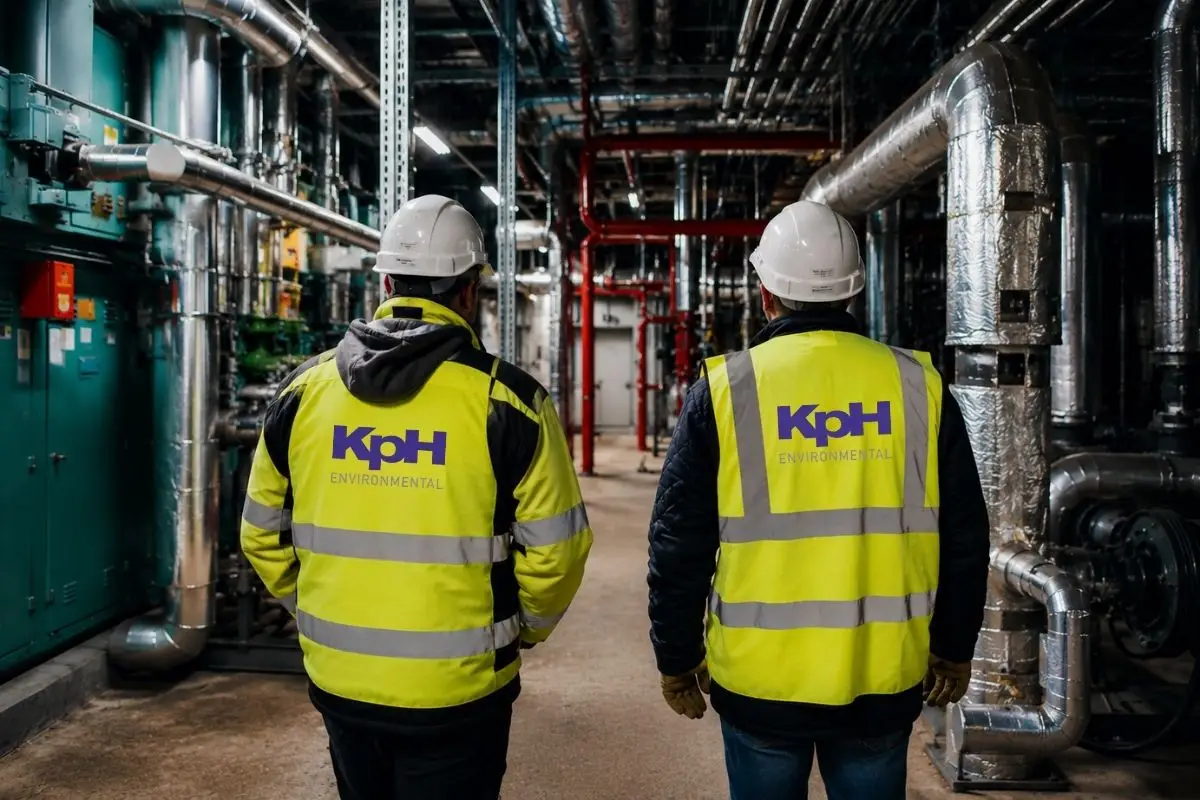
In older buildings across London, tanks are frequently located within basement plant areas that were never designed with modern access or future removal in mind. In live or security-sensitive environments, removal works must also be carefully coordinated around ongoing building operations and restricted access conditions.
On projects such as the Palace of Westminster, tank removal formed part of a wider programme of mechanical decommissioning works delivered within a live and highly controlled environment. In this context, the success of removal was shaped by planning and sequencing rather than by the physical act of dismantling alone.
When Timing Becomes the Constraint
Where tank removal is introduced late in a project, it often brings avoidable pressure. Access routes may already be constrained by new installations, coordination with other trades becomes more complex, and removal activities can end up sitting on the critical path.
KpH Environmental regularly encounters buildings where tanks have remained in place through earlier phases of work, only to become a limiting factor when new systems are ready to be installed. When removal is planned early, it can be integrated into the wider sequence of works and delivered with greater control and predictability.
Planning Shapes the Outcome
Early consideration of tank removal allows the realities of the building to inform the approach. Access constraints can be properly assessed, tank condition verified and removal methods selected to suit the environment rather than forcing the programme to adapt later.
Across KpH Environmental’s work involving fuel storage tanks, water tanks and other redundant storage infrastructure within occupied buildings, early planning has consistently reduced uncertainty and simplified subsequent phases of work. Where removal is treated as an enabling activity rather than an afterthought, the benefits are felt throughout the project.
Supporting Long-Term Building Objectives
As buildings transition away from legacy systems and move towards more efficient and sustainable operation, the removal of redundant storage tanks plays an important role. Tanks that are no longer required occupy valuable space, introduce ongoing liabilities and can restrict future flexibility if left unresolved.
When removal is planned and delivered as part of a coordinated programme, it supports decarbonisation objectives and future use without introducing unnecessary disruption to building operations.
Experience Makes the Difference
Removing storage tanks in complex buildings is defined less by the technical act of dismantling and more by judgement. Experience of working within constrained environments, live buildings and sensitive sites informs how removal is sequenced, how interfaces are managed and how disruption is minimised.
KpH Environmental’s experience across government buildings, commercial assets and operational sites underpins this approach. Removal is delivered not as a standalone task, but as part of a broader responsibility to protect the building and support its next phase of use.
Getting the Timing Right
In most cases, the removal of redundant storage tanks is the correct long-term decision. The value lies in recognising when that removal should take place and ensuring it is planned with sufficient foresight to support wider project objectives.
When approached in this way, tank removal becomes a decisive and enabling intervention that clears the path for safer, more flexible and more sustainable buildings.
Planning a Tank Removal Project?
KpH Environmental can assess your tanks, removal routes and operational constraints before coordinating the work within your wider mechanical or refurbishment programme.