



Key Considerations
- Understand what is already in place. Survey plant rooms, roof areas, tanks and associated services before finalising the proposed low-carbon systems.
- Confirm what is still connected. Redundant plant may share pipework, controls or access routes with live systems, affecting how it can be isolated and removed.
- Plan around the building’s operation. In occupied buildings, access, noise, waste removal and service interruptions need to be considered from the outset.
- Account for the space removal creates. Clearing legacy plant can open up options for new equipment, but the sequence of removal and installation matters.
- Identify risks early. Residual fuels, incomplete records and constrained access are easier to manage before the programme and design are fixed.
London has set ambitious Net Zero targets, and across the capital we are seeing increasing momentum behind retrofit, decarbonisation and sustainability-led asset strategies. Heat pumps, smarter controls and low-carbon systems are now firmly part of the conversation.
But in practice, many Net Zero projects don’t stall because of technology. They stall because of what already exists.
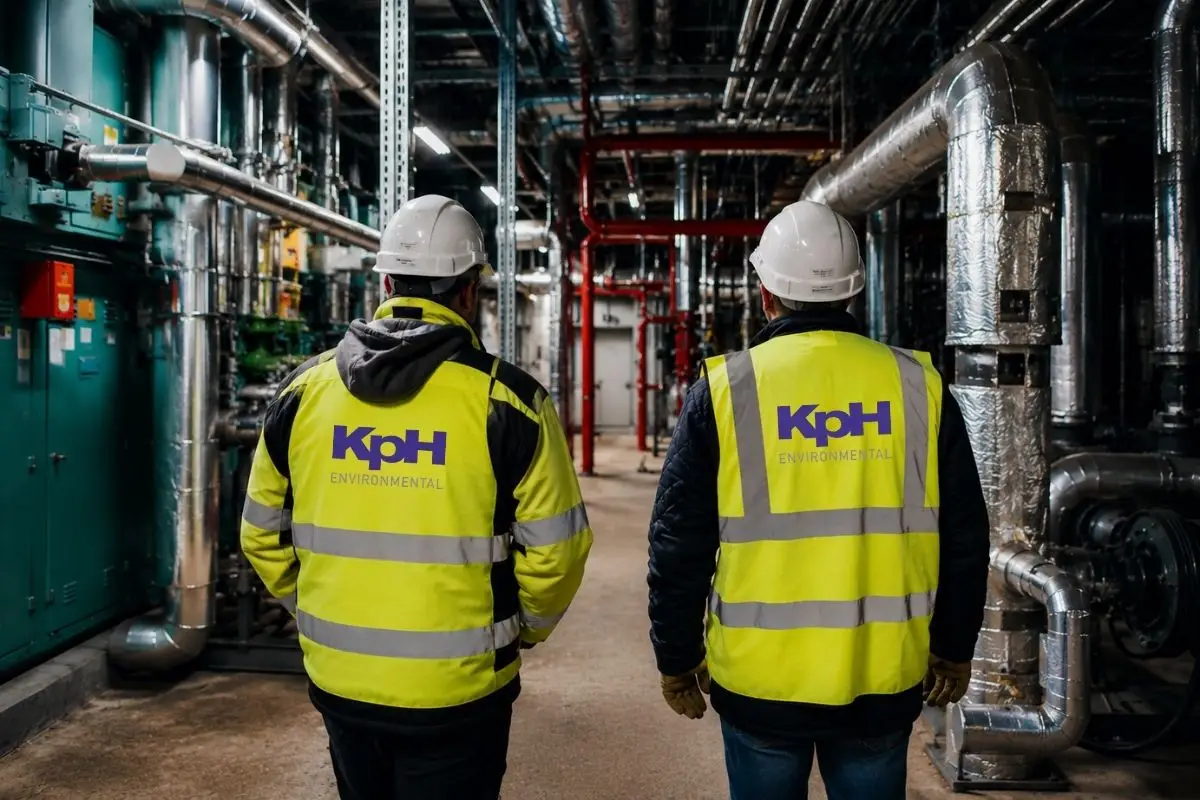
Mechanical plant rooms, often hidden below ground and out of sight, can quietly define what is possible when it comes to decarbonising a building.
Net Zero Isn’t Just About What You Install
Much of the Net Zero narrative focuses on new infrastructure. What is less frequently discussed is the legacy plant that remains in place long after it has stopped serving the building.
Across London, it is common to find plant rooms containing redundant boilers, disused flues, oversized standby systems and fuel storage tanks installed decades ago. These assets were designed for buildings with very different operational demands, regulatory frameworks and energy strategies.
Before new low-carbon systems can be installed, this legacy infrastructure often needs to be addressed safely, compliantly and in the correct sequence.
London’s Building Stock Brings Unique Constraints
Unlike new-build developments, London’s existing building stock is rarely a blank canvas. Many assets are Victorian or Edwardian in origin, with deep basements, limited access routes and highly constrained plant areas. Others are listed or heritage buildings, where structural intervention is tightly controlled.
On top of this, much of London’s retrofit work takes place in live environments. Courts, hospitals, hotels and commercial buildings cannot simply be taken offline to facilitate change.
It is also worth noting that many London buildings now accommodate generators, chillers or other mechanical plant at roof level. While this can be an effective solution where basement space is limited, it often results in a layered approach rather than a full reset. In practice, legacy basement plant and fuel systems are frequently left in situ, creating parallel infrastructure that still needs to be managed from a compliance, environmental and Net Zero perspective.
In these contexts, Net Zero becomes an engineering and logistical challenge before it becomes a sustainability one.
The Silent Blocker: Redundant Plant and Tanks
Redundant plant is often assumed to be benign. In reality, it can present a significant barrier to decarbonisation.
Legacy assets may still be connected to live systems, contain residual fuels or pose environmental and fire risks. Oil and fuel tanks, in particular, are frequently left in situ “just in case”, partially decommissioned or poorly documented.
From a Net Zero perspective, these assets:
- Occupy valuable space needed for modern low-carbon plant
- Introduce environmental and compliance risk
- Complicate EPC improvements and sustainability reporting
- Delay feasibility and planning stages when discovered late
In many cases, the physical presence of legacy infrastructure prevents sustainability strategies from progressing beyond concept stage.
Decommissioning as an Enabler, Not an Afterthought
Decommissioning is often misunderstood as demolition. In reality, it is a controlled, highly planned process that sits at the foundation of successful retrofit and decarbonisation programmes.
Effective mechanical decommissioning involves isolating systems, cleaning and making plant safe, dismantling assets in sections and removing waste in line with environmental and regulatory requirements. In live buildings, this work must be carefully sequenced and coordinated to avoid disruption.
Rather than being a final step, decommissioning is frequently the enabling works that unlock what comes next.
Why This Is Often Missed in Net Zero Roadmaps
Many Net Zero strategies are technically sound but physically constrained. Sustainability frameworks can focus heavily on future systems without fully accounting for the realities of existing infrastructure.
This is not a failure of ambition, but a reminder that legacy plant must be understood early. Without that visibility, programmes can face unexpected delays, increased costs and avoidable risk once works are underway.
Early engagement around plant decommissioning allows constraints to be identified, risks to be managed and retrofit strategies to be grounded in what is practically achievable.
Net Zero Starts Below Ground
For many London buildings, the route to Net Zero does not start on the roof with renewables. It starts below ground, in plant rooms that quietly dictate space, compliance and opportunity.
Addressing legacy mechanical infrastructure early is not just good engineering practice. It is a critical part of delivering realistic, resilient and successful Net Zero outcomes across the capital.
Planning a Retrofit or Decarbonisation Project?
Legacy plant can shape what is possible long before new systems are installed. If you are assessing an existing building, KpH Environmental can help identify what needs to be safely decommissioned and removed to make way for the next stage.