



KpH Environmental provides specialist industrial tank cleaning services for commercial, industrial and infrastructure sites throughout London, the South East and across the UK. We work with fuel, oil, water, chemical and aviation fuel storage systems, helping clients maintain compliance, protect critical assets and support the safe operation of their facilities.
Whether as part of a planned maintenance programme, compliance inspection, tank decommissioning project or wider site redevelopment, industrial tank cleaning requires specialist expertise, accredited personnel and robust safety procedures. KpH Environmental delivers a fully managed service, including tank cleaning, hazardous waste management, certification and compliance reporting, ensuring every project is completed safely, efficiently and in accordance with current regulations.
Over time, fuel tanks, oil tanks, chemical storage tanks and water storage systems accumulate sludge, sediment, water ingress and microbial contamination. Left unmanaged, these contaminants can reduce fuel quality, accelerate internal corrosion, compromise storage capacity and increase the risk of equipment failure, environmental incidents and costly unplanned maintenance.
Industrial tank cleaning is therefore an essential part of any preventative maintenance, compliance or asset management programme. For sites operating standby generators, heating systems, process equipment or bulk fuel storage infrastructure, regular tank cleaning can help extend asset life, improve operational reliability and provide assurance that storage systems remain fit for purpose.
KpH Environmental delivers industrial tank cleaning services across a wide range of storage systems, from generator day tanks and commercial fuel tanks through to large-scale aviation fuel and bulk liquid storage facilities. Our experience includes the cleaning, inspection and maintenance of tanks at airports, defence establishments, hospitals, industrial facilities and commercial properties throughout the UK.
Where required, tank cleaning can be combined with compliance inspections, tank surveys, fuel transfer operations, decommissioning works and environmental remediation services, providing clients with a single contractor solution from initial assessment through to final certification.
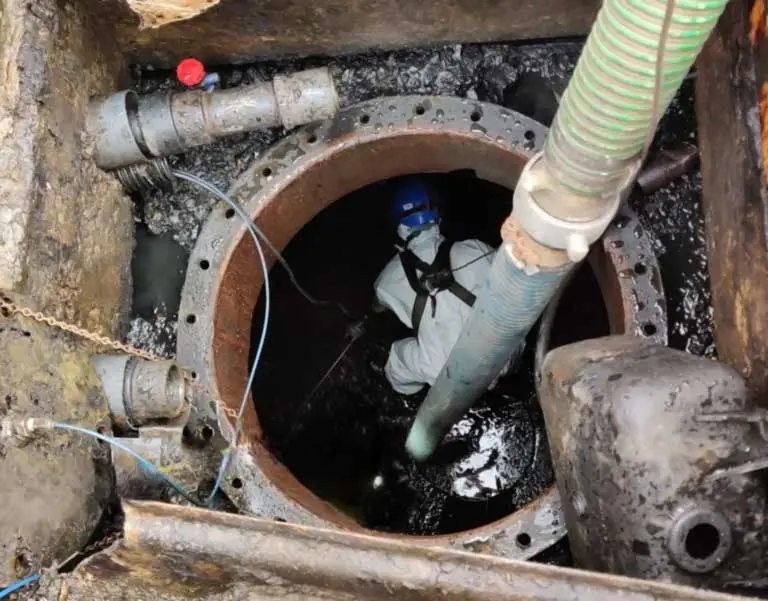

Industrial sites carry a wide range of tank assets, and not all tank cleaning contractors cover the full spectrum. KpH Environmental handles industrial tank cleaning across the following storage systems:
Our operatives are OFTEC registered, trained in confined space entry and equipped to handle hazardous materials at any of the above. Specific cleaning services for fuel tank cleaning and oil tank cleaning are also available as standalone services.
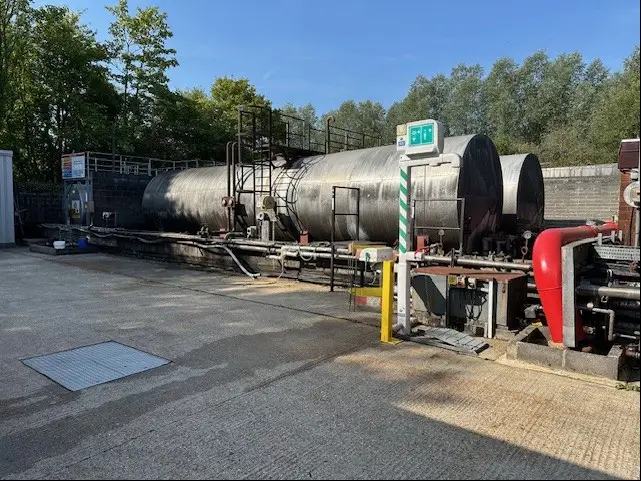
Industrial storage tanks are critical assets, yet they are often overlooked until a problem develops. Over time, the accumulation of sludge, water, sediment and microbial contamination can affect fuel quality, reduce operational efficiency and accelerate deterioration within the tank itself.
Regular tank cleaning and inspection are not simply maintenance activities; they form an important part of asset management, environmental compliance and risk reduction. Across sectors such as aviation, defence, healthcare, manufacturing and commercial property, organisations are increasingly expected to demonstrate that storage systems are being maintained in accordance with current regulations and industry standards.
The regulatory framework governing industrial storage tanks is extensive. The Environment Agency sets requirements for the management and disposal of hazardous waste, HSE guidance governs safe working practices and confined space entry, whilst OFTEC standards apply to many oil storage and heating systems. For facilities managers and asset owners, maintaining accurate inspection and maintenance records is becoming increasingly important for compliance, insurance and audit purposes.
By incorporating industrial tank cleaning into a planned maintenance programme, organisations can identify issues before they escalate, extend the lifespan of critical assets and demonstrate compliance with relevant environmental and safety requirements.
For sites requiring a broader assessment of storage infrastructure, KpH Environmental also provides tank surveys, compliance inspections and condition assessments to help clients understand the current status of their tank assets and prioritise future maintenance or replacement works.
Every industrial tank cleaning project undertaken by KpH Environmental follows a structured methodology developed through more than 25 years of working on fuel storage, oil storage, aviation fuel and industrial tank systems across the UK. From commercial properties and hospitals to airports and defence facilities, our approach is designed to prioritise safety, compliance and operational continuity.
01
Before works commence, our team undertakes a detailed assessment of the tank, surrounding infrastructure and any operational constraints. This information is used to develop site-specific RAMS.
02
Storage tanks are isolated from active systems and subjected to gas testing where required. Degassing procedures are carried out to remove potentially hazardous vapours and confirm safe conditions for entry, inspection or mechanical cleaning operations.
03
Using specialist extraction equipment and vacuum tankers, we remove sludge, sediment, water ingress, contaminated product and other residues that may have accumulated within the tank. For larger industrial tanks and bulk fuel storage systems, this process may be undertaken in carefully managed stages.
04
Following cleaning, tanks can be inspected to assess their condition and identify any signs of corrosion, deterioration or structural defects. Inspections may include assessment of tank walls, welds, bunds, pipework and associated infrastructure. Where required, ultrasonic thickness testing can be undertaken to support compliance and asset management programmes.
05
All waste materials are transported and disposed of in accordance with current environmental legislation. KpH Environmental provides waste transfer documentation and maintains traceability throughout the disposal process, helping clients to meet their ESG requirements.
06
Upon completion, clients receive a report outlining the condition of the tank, inspection findings and any recommended remedial actions. This documentation can support insurance requirements and future maintenance planning.
01
Before works commence, our team undertakes a detailed assessment of the tank, surrounding infrastructure and any operational constraints. This information is used to develop site-specific RAMS.
02
Storage tanks are isolated from active systems and subjected to gas testing where required. Degassing procedures are carried out to remove potentially hazardous vapours and confirm safe conditions for entry, inspection or mechanical cleaning operations.
03
Using specialist extraction equipment and vacuum tankers, we remove sludge, sediment, water ingress, contaminated product and other residues that may have accumulated within the tank. For larger industrial tanks and bulk fuel storage systems, this process may be undertaken in carefully managed stages.
04
Following cleaning, tanks can be inspected to assess their condition and identify any signs of corrosion, deterioration or structural defects. Inspections may include assessment of tank walls, welds, bunds, pipework and associated infrastructure. Where required, ultrasonic thickness testing can be undertaken to support compliance and asset management programmes.
05
All waste materials are transported and disposed of in accordance with current environmental legislation. KpH Environmental provides waste transfer documentation and maintains traceability throughout the disposal process, helping clients to meet their ESG requirements.
06
Upon completion, clients receive a report outlining the condition of the tank, inspection findings and any recommended remedial actions. This documentation can support insurance requirements and future maintenance planning.
01
Before works commence, our team undertakes a detailed assessment of the tank, surrounding infrastructure and any operational constraints. This information is used to develop site-specific RAMS.
02
Storage tanks are isolated from active systems and subjected to gas testing where required. Degassing procedures are carried out to remove potentially hazardous vapours and confirm safe conditions for entry, inspection or mechanical cleaning operations.
03
Using specialist extraction equipment and vacuum tankers, we remove sludge, sediment, water ingress, contaminated product and other residues that may have accumulated within the tank. For larger industrial tanks and bulk fuel storage systems, this process may be undertaken in carefully managed stages.
04
Following cleaning, tanks can be inspected to assess their condition and identify any signs of corrosion, deterioration or structural defects. Inspections may include assessment of tank walls, welds, bunds, pipework and associated infrastructure. Where required, ultrasonic thickness testing can be undertaken to support compliance and asset management programmes.
05
All waste materials are transported and disposed of in accordance with current environmental legislation. KpH Environmental provides waste transfer documentation and maintains traceability throughout the disposal process, helping clients to meet their ESG requirements.
06
Upon completion, clients receive a report outlining the condition of the tank, inspection findings and any recommended remedial actions. This documentation can support insurance requirements and future maintenance planning.
Where cleaning identifies the need for further works, KpH Environmental can also provide tank surveys, hazardous waste remediation, tank removal and tank decommissioning services, delivering a seamless solution through a single contractor.
Aviation fuel storage environments demand the highest standards of safety, compliance and operational control. KpH Environmental has delivered industrial tank cleaning and bulk fuel storage tank maintenance at Gatwick Airport through a five-year ExxonMobil Framework Contract, supporting the inspection, cleaning and maintenance of fuel storage infrastructure across the UK.
The framework also extends to Shell UK, covering the cleaning and maintenance of Jet A-1 aviation fuel storage tanks at both Gatwick and Luton Airports. These projects involve working within highly regulated operational environments where fuel quality, environmental compliance and asset integrity are critical to ongoing operations.
Our role has included the cleaning, inspection and maintenance of large-scale fuel storage assets, supporting clients in maintaining regulatory compliance, extending asset life and reducing operational risk. The scale and complexity of these projects require robust planning, specialist equipment and strict adherence to site-specific safety procedures.
As part of ExxonMobil’s contractor assurance programme, KpH Environmental is subject to regular performance audits. During our most recent audit, we were ranked within the top 5% of performing contractors in the UK, with particular recognition given to our document control procedures, compliance management and site operations.
This long-standing framework demonstrates KpH Environmental’s capability to deliver industrial tank cleaning services within some of the UK’s most demanding fuel storage and aviation environments.
Defence and secure infrastructure sites present unique challenges, requiring strict adherence to safety procedures, security protocols and operational continuity requirements. KpH Environmental was appointed to deliver a comprehensive fuel tank inspection, cleaning and compliance programme at a Lockheed Martin facility in Bedfordshire.
The project involved the inspection and assessment of nine fuel storage tanks and associated pipework, including ultrasonic thickness testing, confined space internal inspections, tank cleaning, degassing, fuel transfer operations and OFTEC inspections. Working across multiple buildings, the programme required careful planning and phased access to ensure minimal disruption to site operations while maintaining the highest standards of safety and compliance.
In addition to cleaning and inspection works, KpH Environmental provided detailed condition assessments and compliance reporting, giving the client a clear understanding of the condition, performance and remaining service life of its fuel storage infrastructure. The information gathered enabled informed maintenance planning and helped ensure ongoing compliance with relevant HSE, environmental and industry requirements.
Projects of this nature demonstrate the value of combining industrial tank cleaning, tank inspections, ultrasonic testing and compliance assessments within a single programme, providing asset owners with both immediate assurance and a clear strategy for future maintenance and investment.
Industrial tank cleaning sits within a layered regulatory framework. The accreditations a contractor holds signal whether they can manage the compliance, safety and environmental requirements that industrial clients face.








These accreditations and certifications represent the audit processes, training standards and documentation frameworks that facilities managers and procurement leads require from specialist contractors on industrial sites.
For more than 25 years, KpH Environmental has delivered industrial tank cleaning, inspection and compliance services across some of the UK’s most demanding environments. Our experience spans airports, defence facilities, NHS hospitals, commercial property portfolios, listed buildings, industrial sites and bulk fuel storage terminals.
This breadth of experience matters when working with critical infrastructure. No two tank cleaning projects are identical. Storage systems vary in age, construction, contents, access requirements and regulatory obligations. Whether managing a live aviation fuel installation, a legacy heating oil tank within a listed building or a multi-tank compliance programme across an operational estate, our teams understand the practical and regulatory challenges involved.
Our capability extends beyond tank cleaning alone. Clients regularly engage KpH Environmental to undertake tank inspections, ultrasonic thickness testing, compliance assessments, fuel transfer operations, tank decommissioning and hazardous waste remediation. This allows projects to be managed through a single contractor, reducing interfaces, improving communication and simplifying compliance management.
National coverage enables us to support organisations with multiple sites across the UK, while our experienced surveyors provide practical advice from the earliest stages of a project. Many of our industrial tank cleaning contracts develop into long-term maintenance and compliance programmes, reflecting the confidence clients place in our technical expertise, safety standards and project delivery.
Years' experience
UK contractor ranking
Accreditations held
Service coverage
Industrial tank cleaning is the professional removal of sludge, sediment, water ingress, microbial contamination and residual product from fuel, oil, chemical and aviation storage tanks. It includes safe degassing, hazardous waste disposal under Environment Agency regulations and compliance documentation.
PPG2 Oil Storage Regulations require periodic inspection and maintenance for tanks holding more than 200 litres of oil. In practice, most industrial fuel tanks benefit from a professional clean every 3 to 5 years. High-use generator tanks, aviation fuel systems and tanks in chemically demanding environments often require annual cleaning.
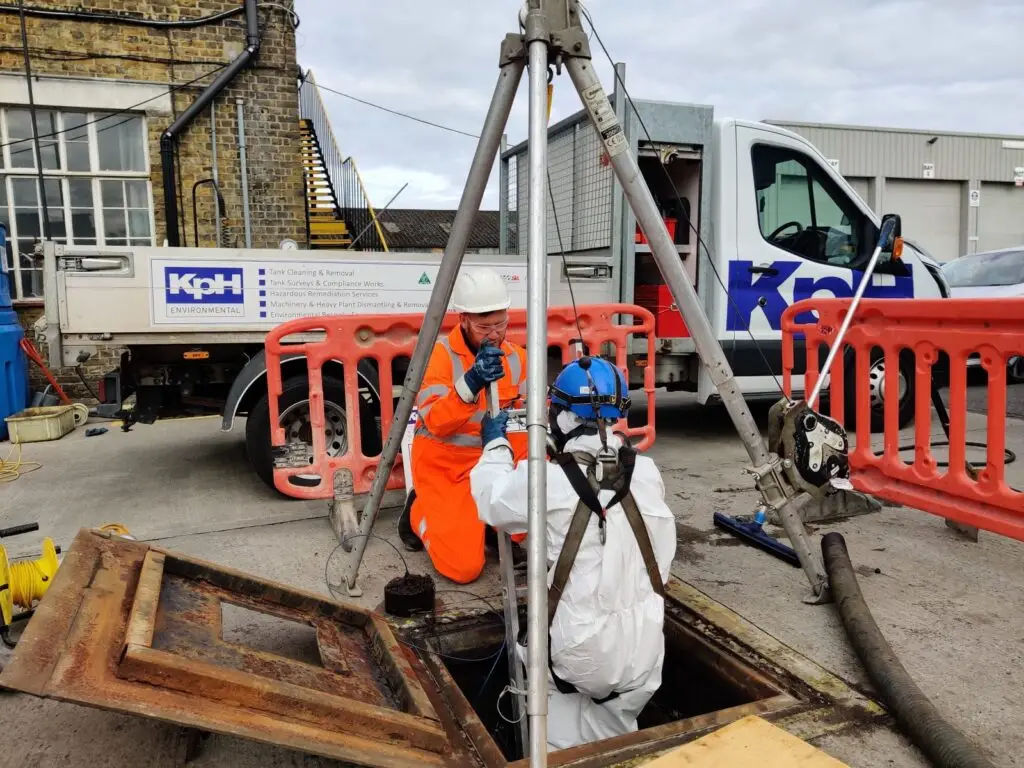
Yes. Our operatives are trained in confined space entry under current HSE guidelines. Every confined space entry is preceded by gas testing and operated under a formal permit-to-work system with standby rescue arrangements in place.
We provide industrial tank cleaning services for a wide range of storage systems, from individual fuel tanks serving commercial buildings to large-scale bulk fuel and aviation fuel storage installations. Having delivered projects across airports, defence facilities, industrial sites and commercial estates, our teams have the experience, equipment and technical expertise to undertake tank cleaning projects of any scale.
All waste is collected in licensed vehicles, transported under current regulations and disposed of at approved facilities. You receive full waste transfer documentation for your compliance and audit records.
Yes. Every project includes a written compliance report detailing tank condition, inspection findings and any recommended remedial works. This document meets the requirements for insurance audits, regulatory inspections and framework contract compliance reviews.
Yes. Before a fuel, oil or chemical storage tank can be removed or permanently decommissioned, it must typically be cleaned, degassed and certified free from hazardous residues. This ensures the tank can be safely dismantled, transported or disposed of in accordance with environmental regulations.
Please use the Get In Touch form or alternatively, you can call or email us:
KpH Environmental Services covers all areas in the following counties of England:
Our services are not limited to the above list but covers all areas of the UK on request.